Abstract: This case study reflects on the journey of a hard-of-hearing individual raised in a mainstream hearing world who fully immersed themselves in the Deaf and hard-of-hearing (DHH) community at Gallaudet University. A more empathetic approach is necessary for interacting with DHH patients, as current language often implies their quality of life is reduced due to hearing loss. This perspective overlooks their abilities and resilience. Immersion in Deaf spaces, communicating primarily in American Sign Language, fosters a deeper understanding of Deaf culture. Immersive experiences improve interactions with DHH individuals and promote culturally competent techniques in audiology, supporting success in both environments.
Summary: This reflection illustrates how immersive experiences in Deaf spaces can enhance understanding and highlights a need for audiologists to be well-versed in Deaf culture to improve their interactions with deaf and hard-of-hearing (DHH) patients.
In audiology, current language and perspectives often imply that a patient's quality of life is automatically reduced by their hearing status. This perspective fails to recognize that individuals with hearing loss can lead fulfilling lives with or without hearing devices. It reinforces a deficit-based view instead of acknowledging their abilities, resilience, and effectiveness of support systems and accommodations.
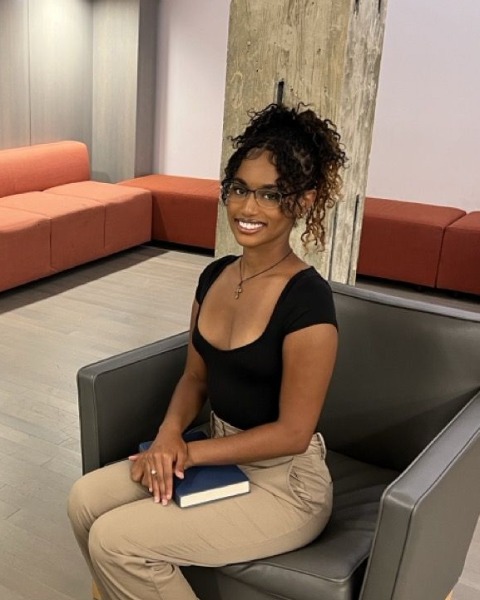
The individual in this case study was diagnosed with hearing loss at birth and began using hearing aids in 1st grade. They grew up in a mainstream hearing world as a “successful bilateral hearing aid user” with minimal interaction with DHH individuals until high school and limited exposure to ASL and Deaf culture prior to the summer of 2024.
They lived on campus for 10 weeks at Gallaudet University with a Deaf roommate and had daily interactions with other DHH individuals through American Sign Language (ASL). During the summer, they completed a research project at Gallaudet University focusing on integrating Large Language Models (LLMs) and hands-free technology with interactive personal assistants (IPAs) to enhance accessibility and usability for DHH users. This project involved experiments with DHH participants and collaboration with a predominantly DHH faculty and staff. Through this experience, the individual learned about the different identities as well as the frustrations of the community while respecting their spaces. Data was collected through personal observations and reflections with DHH community members.
This case study highlights the value of personal immersion in a supportive community and demonstrates how experiences can inform and enrich educational efforts. Immersive experiences in Deaf spaces will enhance understanding of Deaf culture and improve interactions with DHH individuals, which can be applied in audiology practice to foster a more empathetic approach.
Learning Objectives:
Upon completion, participants will be able to explain how immersive experiences in Deaf culture can improve interaction and communication with DHH individuals.

.png)